
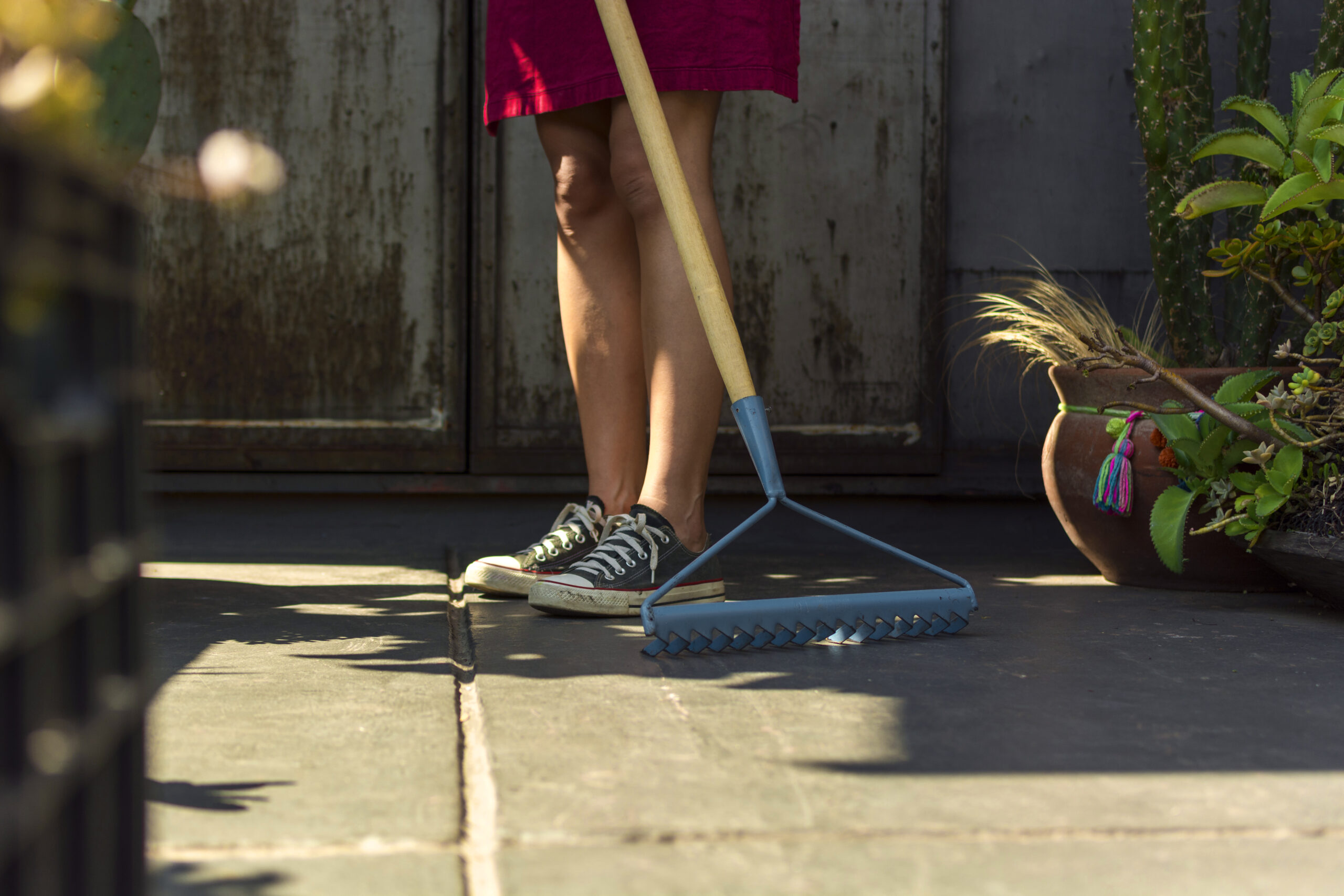
Keeping a concrete patio in good shape isn’t complicated, but it does help to follow a clear routine. Before anything else, give the surface a quick look to see what kind of cleaning it might need. This is also a good time to think about talking to a reliable fence builder if your patio sits against a fence that needs attention, since cleaning can expose issues you didn’t notice before. Once you get familiar with what’s on the surface, dirt, stains, or buildup, you can work through each part of the process at a steady pace and bring the patio back to looking clean and cared for.
Sweep and Remove Debris
Start with a solid sweep across the entire patio. Use a broom that can handle grit so you can push leaves, dirt, and other loose bits out of the way. Pay attention to the sections where debris tends to collect, especially around corners or near plants. Moisture can settle under piles of leaves, which often leads to discoloration, so clearing them helps prevent long-term issues. Getting the surface clean at this stage makes the rest of the work easier and far more effective.
Pre-Treat Stains
Once the patio is cleared off, look closely for marks that need a little more attention. Leaf stains and mildew usually respond well to a simple mix of water and white vinegar. Spray it on, let it rest for a moment, and then scrub gently before rinsing. Grease and oil require something that can absorb the residue, such as baking soda or a degreasing product. Rust happens occasionally, especially near metal furniture, and a bit of lemon juice mixed with salt can help lighten those spots. Handling these marks early helps the deeper cleaning step work much better.
Use a Pressure Washer
A pressure washer makes quick work of dirt that settles into the concrete’s texture. Rinse the patio first to lift the loose material, then begin washing with the nozzle held a short distance from the surface. Keep your movements steady so you don’t leave streaks or patches behind. Heavily soiled areas might need slower passes to clear out everything that’s settled in. Try not to get too close to the nozzle, as too much force can roughen the concrete. Once you’ve gone across the whole patio, give it a moment to drain and look over the areas that might still need extra attention.
Scrub With a Stiff Bristle Brush
If anything remains after pressure washing, a stiff brush helps finish the job. Work across the patio in short strokes, focusing on smaller areas so you can see what’s improving. Corners and edges often hold dirt even after washing, so give those spots an extra pass. Rinse occasionally as you work, letting the water show you which areas are clean and which need more scrubbing. This part feels repetitive, but it brings out a more even, refreshed look.
Apply a Concrete Cleaner
For a deep clean, a concrete cleaner helps lift what regular scrubbing can’t. Wet the patio lightly, then spread the product evenly. Give it time to do its job before brushing again, which helps the cleaner sink into the surface. Each brand has different instructions, so follow them closely to avoid leaving residue behind. After scrubbing, rinse the patio well so the cleaner washes away completely, leaving the concrete ready for the last step.
Seal and Protect the Surface
A good seal keeps the patio looking fresh much longer. Before applying anything, make sure the surface is dry and free of leftover cleaner. Choose a sealer that matches the look you prefer, whether you want something natural or something with a bit more shine. Spread it evenly with a roller or sprayer so the entire surface is covered. After it dries, the patio will resist stains more easily and handle the weather better. Reapplying the sealer every couple of years helps the concrete stay in good shape without much effort.
Related Topics:
- How to Build a Metal Fence: A Step-by-Step Guide
- The Ultimate Guide to Painting a Wood Fence for a Professional Finish